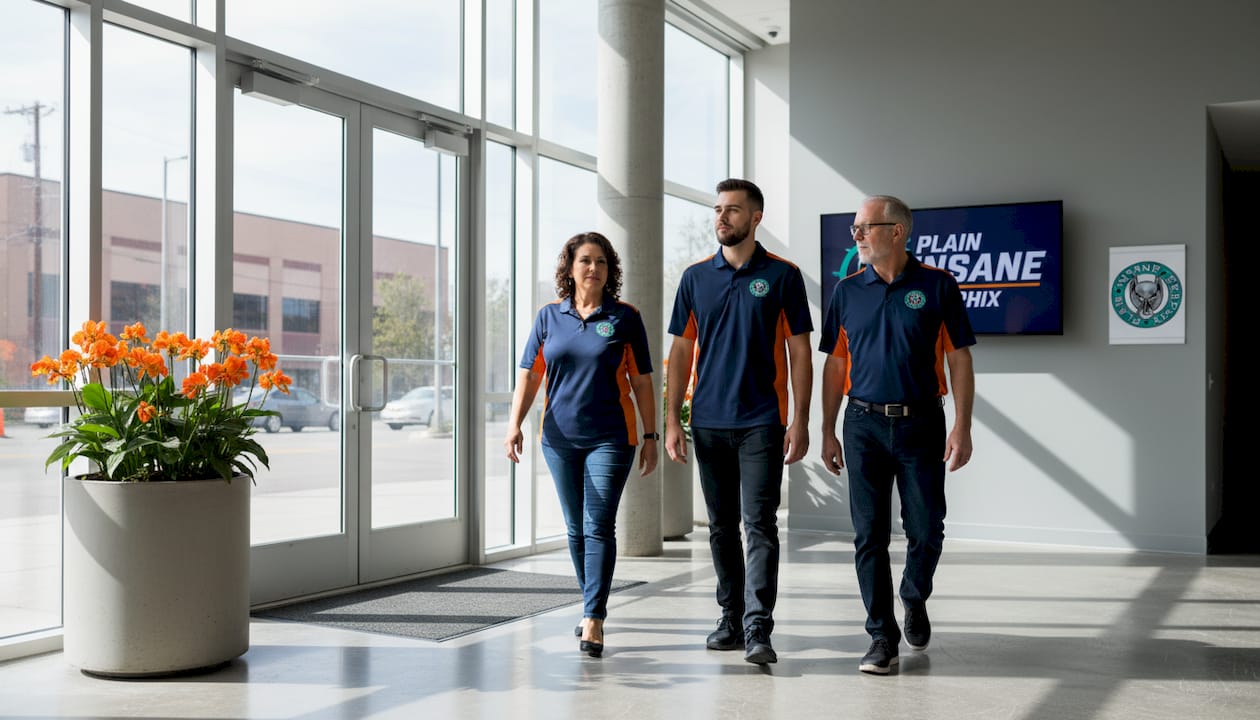
Many California business owners assume that custom uniforms are expensive extras or that the rules around them are simple. Both of those assumptions can cost you. The truth is that branded uniforms sit at the intersection of California employment law and serious marketing strategy, and getting either wrong puts your business at a disadvantage. Whether you run a restaurant in Fresno, coordinate events across the Central Valley, or manage a retail crew in Lemoore, this guide will give you the clarity and practical steps you need to get your uniform and gear program right from the start.
Table of Contents
- What makes uniforms and gear ‘custom branded’?
- California regulations: What employers must know
- Branding value: Business benefits of custom uniforms
- Designing and sourcing standout uniforms and gear
- Why most businesses limit their uniform branding — and how you can do better
- Ready to stand out? Partner with a local custom branding expert
- Frequently asked questions
Key Takeaways
| Point | Details |
|---|---|
| Legal compliance first | California law requires employers to pay for and maintain distinctive uniforms at no cost to employees. |
| Custom branding boosts impact | Branded uniforms and gear enhance visibility, team spirit, and customer trust for California businesses. |
| Design drives recognition | Logos, color consistency, and quality materials set your employees apart and reinforce your brand. |
| Smart sourcing matters | Partnering with local experts ensures compliance, quality, and standout custom designs for your team. |
What makes uniforms and gear ‘custom branded’?
Custom branded uniforms go well beyond slapping a company name on a shirt. At their core, they are garments or accessories that have been intentionally designed to communicate a specific brand identity. That means incorporating your logo, your brand colors, and any slogans or symbols that set your business apart from competitors.
The key elements that transform plain clothing into branded gear include your brand logo essentials, consistent color choices, typography that matches your other marketing materials, and strategic placement of design elements. When these factors work together, every employee wearing that uniform becomes a walking brand ambassador.
Custom branding can be applied to a wide range of items:
- T-shirts and polo shirts
- Hoodies and jackets
- Hats and beanies
- Tote bags and backpacks
- Aprons and vests
- Lanyards and ID badge holders
Here’s a quick look at how plain uniforms compare to custom branded ones:
Plain vs. custom branded apparel
| Factor | Plain uniforms | Custom branded uniforms |
|---|---|---|
| Brand recognition | None | High |
| Employee professionalism | Moderate | Significantly elevated |
| Customer trust signal | Weak | Strong |
| Marketing value | Zero | Ongoing, passive marketing |
| Employee pride | Low | Noticeably higher |
| Event presence | Forgettable | Memorable and cohesive |

The numbers tell a clear story. When your team shows up to a trade show, a community event, or your own storefront in matching, well-designed gear, people notice. That visual consistency communicates reliability, investment in your brand, and a level of professionalism that plain or mismatched clothing simply cannot achieve.

With the basics outlined, it’s important to understand the legal requirements before you invest in custom uniforms for your team.
California regulations: What employers must know
California has some of the strongest worker protection laws in the country, and uniform policies fall squarely under that umbrella. Before you design a single shirt, you need to know what the law expects of you as an employer.
Under California uniform laws, a “uniform” is defined as any apparel and accessories of distinctive design or color that an employer requires employees to wear. This means that if you mandate a specific branded shirt, a particular color combination, or even a logo-embroidered hat, those items qualify as uniforms under California law.
Here’s the rule that catches many employers off guard:
“California law requires employers to provide and maintain required uniforms (distinctive design/color) at no cost to employees, including cleaning; cannot deduct from wages.”
That quote covers a lot of ground. You cannot ask employees to buy their own branded gear if it meets the legal definition of a uniform. You cannot deduct the cost of uniforms from their paychecks. And you are responsible for covering cleaning and maintenance costs as well. Failing to follow these rules exposes you to wage claims and labor complaints, which are far more expensive than just handling uniform costs upfront.
When choosing durable apparel, keep these compliance must-dos in mind:
- Provide all required branded items at zero cost to employees
- Cover ongoing cleaning and maintenance costs, either directly or through a reimbursement policy
- Never deduct uniform expenses from regular wages
- Document your uniform policy clearly in your employee handbook
- Ensure your uniform policy does not create disparate impact on any protected group
- Review your policy annually as California employment law evolves
One common pitfall is the gray area around “suggested” versus “required” clothing. If you merely suggest that employees wear navy blue shirts with the company logo, it may not legally qualify as a uniform. But if you enforce that standard consistently, a court may treat it as a required uniform regardless of how you label it. When in doubt, provide the gear yourself and keep your costs predictable.
Understanding your legal responsibilities is the foundation. Now let’s see how custom branding intersects with these requirements and can become a real asset.
Branding value: Business benefits of custom uniforms
Complying with the law is the floor, not the ceiling. Smart employers and event organizers recognize that custom uniforms are one of the most cost-effective marketing tools available, especially for businesses that rely on local foot traffic and community visibility across the Central Valley.
Research from the promotional products advice sector consistently shows that branded merchandise increases brand recall and fosters customer loyalty at a fraction of the cost of traditional advertising channels. Your employees are already showing up to work every day. Putting them in branded gear means you’re getting marketing value from a resource you’re already paying for.
Here are the five biggest business benefits of investing in branded uniforms and gear:
- Stronger customer trust. When customers can immediately identify your staff, they feel more secure asking for help, making purchases, or engaging with your brand at events.
- Free daily marketing. Every time an employee commutes, grabs lunch, or runs an errand in their branded gear, your business gets exposure beyond your four walls.
- Team cohesion and morale. Studies consistently show that shared uniforms create a sense of belonging. Team spirit with branded tees is a real, measurable effect that reduces turnover and improves collaboration.
- Event presence that stands out. At crowded fairs, farmers markets, and trade shows, a well-dressed team in cohesive gear draws attention and projects authority. Looking at creative team apparel examples can spark ideas for your own setup.
- Long-term ROI. Quality branded gear lasts seasons, not just days, and the personalized merchandise benefits compound over time as your brand becomes more recognizable.
Here’s a practical look at estimated ROI by gear type, based on typical usage cycles:
Estimated ROI by gear type
| Gear type | Average lifespan | Brand impressions per day | Estimated cost per impression |
|---|---|---|---|
| Branded t-shirt | 12 to 18 months | 30 to 50 | Very low |
| Embroidered hat | 18 to 24 months | 20 to 40 | Very low |
| Custom hoodie | 24 to 36 months | 25 to 45 | Extremely low |
| Branded tote bag | 12 to 24 months | 40 to 80 | Very low |
| Event vest/apron | 24 to 48 months | 60 to 100 | Negligible |
Pro Tip: Consistency multiplies impact. If your team wears branded hats but mismatched shirts, the overall effect is diluted. When every piece of gear matches your brand color palette and logo standards, the professional impression your team creates is exponentially stronger than the sum of its parts.
Once you see the benefits, the next question is: how do you design and source distinctive gear that truly stands out?
Designing and sourcing standout uniforms and gear
Great branded gear starts with a clear plan. Jumping straight to a print order without thinking through your design, material choices, and budget typically results in gear that looks dated within a year or ends up stacked in a storage room. Here’s a step-by-step process to get it right:
- Define your brand standards first. Before anyone touches a design file, confirm your exact logo files, color codes (Pantone, CMYK, or hex values), and any font guidelines. This is the foundation of every good custom shirt design guide.
- Choose your garments based on function. A restaurant crew in Fresno needs breathable fabrics for a hot kitchen. A landscaping company operating under the Central Valley sun needs UV-resistant materials. Match the fabric to the work environment first.
- Select your printing or decoration method. Screen printing works well for large runs of the same design. Embroidery adds a premium, durable finish that holds up through repeated washing and is especially effective on hats and jackets. Learn more about using embroidery for branding before you finalize your method.
- Work with a local supplier who understands your market. A Fresno or Lemoore-based print shop knows the climate, the regional business culture, and the turnaround expectations of local employers. That local knowledge saves time and prevents costly missteps.
- Request samples before committing to a full run. Even the most detailed design can look different on fabric than it does on a screen. A sample lets you evaluate color accuracy, placement, and overall quality before you order for your whole team.
- Plan for replacements from the start. Uniforms wear out. New employees arrive. Build a reorder schedule into your annual budget so you’re never caught with a patchy-looking team at a key event.
When weighing local print shops against large online suppliers, local wins on several important fronts. You get face-to-face communication, faster revisions, easier returns, and a partner who is genuinely invested in your outcome. Explore local t-shirt printing solutions to understand the full scope of what a regional printer can offer.
Pro Tip: Whenever your budget allows, prioritize eco-friendly and durable materials. Recycled polyester blends and organic cotton options are increasingly available at competitive prices. They hold prints better over time and signal to your customers and employees that your business takes quality and sustainability seriously.
Armed with these steps, it’s also wise to think beyond compliance and routine branding and consider expert perspective on creating lasting impact.
Why most businesses limit their uniform branding — and how you can do better
Here’s the honest take from working with businesses across the Central Valley: most companies play it completely safe with their branded gear, and the result is completely forgettable. They pick a basic polo, slap a logo on the left chest, and call it done. Then they wonder why their brand presence feels flat at events and why employees never wear their gear off the clock.
The businesses that get real traction from their uniforms treat them the way a creative director would treat a product launch. They think about color psychology, about the story the garment tells before a word is spoken, and about whether the gear makes employees feel proud or just compliant. There’s a significant difference between a team that wears their branded hoodie on weekends because they love it and a team that stuffs it in their locker the moment their shift ends.
The overlooked opportunity is in texture and technique. A flat screen print reads as a basic staff shirt. But quality advanced embroidery strategies on a structured cap or a premium jacket elevate the perceived value of the entire brand. Customers notice. Employees feel the difference.
The other mistake is treating uniform orders as a one-time event rather than an ongoing investment. Your brand evolves. Your team grows. Seasonal gear for summer events or holiday promotions keeps your brand presence fresh and gives employees something new to connect with throughout the year. Think of your branded apparel program the way you think about social media: it needs regular updates to stay relevant and generate engagement.
The balanced approach is this: meet the compliance baseline, then push past it creatively. Comfort, durability, and visual impact are not competing priorities. They’re all achievable when you partner with the right people and approach the process with intention.
Ready to stand out? Partner with a local custom branding expert
If this article has done its job, you’re now thinking about your uniform program differently. Not just as a legal checkbox, but as a genuine brand-building tool with real ROI and a creative upside most businesses haven’t tapped yet.

At Plain Insane Graphix in Lemoore, we work with Central Valley business owners and event organizers every day to bring their brand vision to life on apparel, hats, bags, and more. Whether you’re starting from scratch or upgrading an existing program, our team offers design support, fast turnaround, and competitive pricing. Check out our local custom embroidery options for premium finishes, or browse our full range of printing and promotional gear to find the right fit for your team. Voted the best print shop in Kings County, we’re here to help you build something your team will actually want to wear.
Frequently asked questions
Are California employers required to pay for employee uniforms?
Yes, California law mandates that employers must provide and maintain required uniforms at no cost to employees, covering both the garments and any cleaning expenses.
What counts as a ‘uniform’ under California law?
A uniform is any distinctive apparel required by the employer, including specific colors or styles set apart from regular attire. If your employer consistently enforces a branded dress code, California uniform law likely considers it a required uniform, regardless of how it’s labeled internally.
Can employers deduct cleaning costs or uniform expenses from wages?
No. Employers are not allowed to deduct uniform costs, including cleaning fees, from employees’ paychecks under any circumstances in California.
What’s the best material for long-lasting, branded uniforms in California’s climate?
Look for breathable, moisture-wicking fabric blends such as polyester-cotton mixes, which hold prints well, resist fading under the Central Valley sun, and stay comfortable during long shifts in warm weather.
Recommended
- Custom Embroidery | Lemoore & Hanford | Plain Insane Graphix
- Why use personalized merchandise? Boost your brand
- How to choose branded apparel that impresses and endures
- Personalized T-Shirts: Boost Team Spirit and Brand Impact
- Why Custom Branded Golf Accessories Boost Your Corporate Image – Aiming Fluid Golf
- Company branding essentials: Boost recognition with the right promo
Leave a Reply