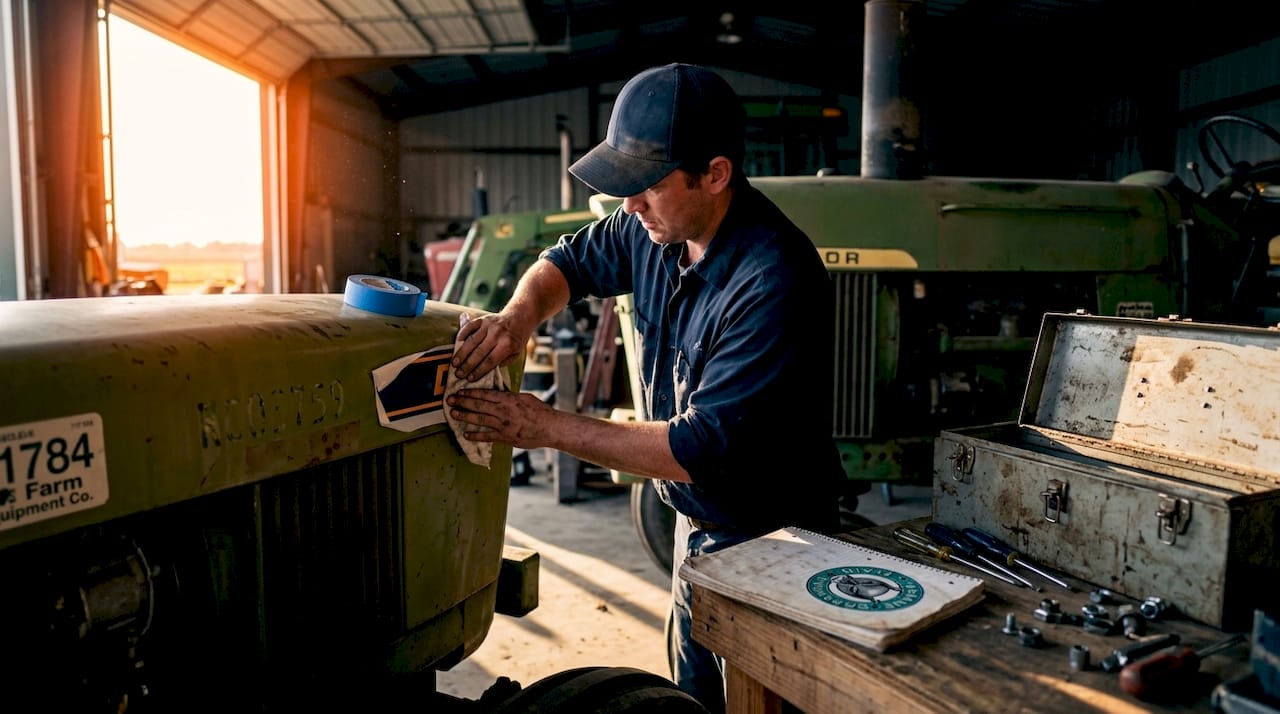
Most farmers think of decals as an afterthought. A logo slapped on a truck door. A safety sticker that came with the equipment. But well-placed, professionally printed decals can significantly increase how recognizable your farm brand is, both on the road and at local markets. Research consistently shows that consistent visual branding across your vehicles, equipment, and packaging builds buyer trust faster than almost any other low-cost investment. If you’re running an agricultural operation in California’s Central Valley, printed decals aren’t decoration. They’re a working part of your business.
Table of Contents
- The role of printed decals in modern agriculture
- Key applications: Where decals make a difference on the farm
- Choosing the right decal: Materials, printing methods, and design tips
- Getting the most from your decals: Best practices for application and maintenance
- California farms: Why decals are an overlooked branding powerhouse
- Ready to upgrade your farm’s visibility? Get custom decals today
- Frequently asked questions
Key Takeaways
| Point | Details |
|---|---|
| Decals reinforce branding | Printed decals make your farm’s name, logo, and message more visible to your community and customers. |
| Durability matters | Choosing the right materials means your decals will endure California’s outdoor conditions for years. |
| Application affects lifespan | Proper surface prep and regular maintenance keep decals looking sharp and working well. |
| Local expertise helps | Working with California-based print professionals ensures your decals are tailored to local agricultural needs. |
The role of printed decals in modern agriculture
Let’s be direct. Running a farm operation in California means managing a massive number of moving parts. Equipment rolls across fields before sunrise. Workers move between stations. Trucks haul produce to distribution points or farmers markets. In the middle of all that activity, your brand either shows up consistently or it doesn’t. Printed decals are one of the most practical ways to make sure it does.
The Central Valley branding impact is real. When buyers, partners, and regulators see a clean, consistent visual identity across your fleet and equipment, they read that as a sign of professionalism. It tells them your operation is organized and trustworthy. That impression matters, whether you’re selling to a grocery chain, a food processor, or a family at the Hanford farmers market.
Beyond marketing, decals serve several functional roles that California farms can’t afford to overlook:
- Asset identification: Mark your tractors, trailers, irrigation equipment, and storage bins so you can track them across large properties or shared facilities.
- Safety compliance: Display hazard warnings, lockout/tagout instructions, and PPE requirements directly on the equipment where workers need them most.
- Regulatory signage: Many state and federal agricultural regulations require visible warnings on specific machines and chemicals. Printed decals make compliance straightforward.
- Brand consistency: When your logo and contact information appear on every truck, bin, and piece of equipment, you’re building recognition without spending extra on advertising.
A professionally branded fleet doesn’t just look good. It works as a mobile billboard every time your trucks travel through Fresno, Tulare, or Visalia. You’re advertising your farm every mile of the way.
Affordability is another reason decals make sense for farms of all sizes. A high-quality vinyl decal costs a fraction of what you’d spend on painted signage, and it lasts for years when properly applied and maintained. The Central Valley sun is harsh. Temperatures regularly exceed 100 degrees Fahrenheit in the summer. But quality outdoor-rated decals are built to handle those conditions without fading or peeling prematurely.
Pro Tip: Always choose UV-resistant, weatherproof vinyl for any decal that will be exposed to direct sunlight. Ask your print provider to specify outdoor-rated materials, especially for anything mounted on equipment that stays outside year-round.
Key applications: Where decals make a difference on the farm
With a sense of why decals are so useful, let’s look at exactly where they have the biggest impact for agricultural businesses.
There are more use cases for printed decals on a California farm than most operators realize. The key is thinking systematically about where your brand, your safety information, and your operational details need to be visible. Here’s a breakdown of the biggest opportunities:

| Application area | Decal type | Primary benefit |
|---|---|---|
| Tractors and harvesters | Vinyl equipment labels | Asset ID and brand visibility |
| Trucks and trailers | Full or partial vehicle graphics | Mobile advertising |
| Produce bins and crates | Weatherproof product labels | Brand and traceability |
| Irrigation and utility systems | Chemical-resistant labels | Safety and compliance |
| Farm stand and market booths | Banner and window decals | Customer-facing promotion |
| Event signage | Removable promotional decals | Seasonal marketing |
The most impactful place to start is your vehicle fleet. Every truck or trailer that carries your name through Kings County or out on Highway 99 is a moving advertisement. If you’re looking for decal printing for farm equipment with fast turnaround and local knowledge, working with a printer who understands the agricultural environment makes all the difference.
Here’s a numbered list of the most practical applications to prioritize:
- Equipment labeling: Mark every major piece of machinery with your operation’s name, a unique ID number, and basic safety warnings. This protects you from liability and simplifies inventory management.
- Vehicle branding: Put your logo, farm name, phone number, and website on truck doors, tailgates, and trailers. Even a simple partial graphic is more effective than blank metal.
- Produce and packaging branding: Use printed labels and decals on bins, crates, and containers to reinforce your brand at every point in the supply chain.
- Safety and compliance signage: Place hazard warnings, PPE reminders, and operational instructions where workers interact with equipment daily.
- Seasonal promotion: Use decals on farm stand signage, event banners, and market booths to promote farm-to-table events, harvest festivals, or new products. Avenal promo decals are a great example of localized promotional materials that get noticed.
Pro Tip: Invest in reflective decals for any equipment that operates during early mornings or at night during harvest season. Reflective materials dramatically improve visibility and can prevent accidents in low-light conditions on rural roads.
Thinking about decals this way shifts them from a cosmetic choice to a strategic operational tool. Every surface becomes an opportunity to communicate something useful, whether it’s your contact info for a potential buyer or a clear safety warning for a new employee.
Choosing the right decal: Materials, printing methods, and design tips
Seeing how decals fit into your operations raises the question: which decals are best for your needs?
Not all decals are created equal, and the wrong material choice can cost you money when labels fade, peel, or fail before their time. Here’s what you need to understand about materials, printing methods, and design before you place your next order.
Material options for farm decals:
- Cast vinyl: The premium choice for long-term outdoor applications. Cast vinyl conforms well to curved surfaces and is extremely resistant to UV fading, heat, and moisture. Ideal for vehicle graphics and large equipment.
- Calendered vinyl: A more affordable option that works well for flat surfaces and shorter-term applications. Good for indoor signage or equipment that stays protected from direct sun.
- Polyester: Excellent chemical resistance, making it the right choice for labels on pesticide containers, fuel tanks, and chemical storage areas.
- Magnetic: Fully removable and reusable. Best for seasonal promotions or situations where you need to swap branding between vehicles or equipment.
When it comes to printing methods, you’ll encounter three main approaches:
| Printing method | Best for | Durability | Cost |
|---|---|---|---|
| Digital printing | Full-color logos and photos | High (with laminate) | Moderate |
| Screen printing | Simple, bold designs in few colors | Very high | Lower per unit at volume |
| Thermal/heat transfer | Specialty materials and short runs | Moderate | Higher per unit |
For most farm applications, digital printing on cast vinyl with a laminate coating is the sweet spot. It handles full-color logos beautifully and holds up well against the elements. You can explore choosing decal materials with a local expert to match your specific use case.
Design is just as important as material selection. A poorly designed decal wastes your investment no matter how good the material is. Keep these principles in mind:
- Use high-contrast color combinations: Black text on white or yellow, or white text on dark green or navy, reads clearly from a distance and in varying light conditions.
- Keep text short and legible: Your farm name, phone number, and maybe a tagline. Resist the urge to cram too much information onto equipment labels.
- Include your logo consistently: A professional logo anchors your brand identity. If you don’t have one, consider pairing your decal order with custom graphics for decals and related branded materials.
- Order extras: Always order 10 to 20 percent more decals than you currently need. Equipment gets repaired, labels get damaged, and having spares on hand means you’re not waiting weeks for a reorder when you need a replacement fast.
Pro Tip: Partner with a local print provider who has direct experience working with agricultural clients in your region. They’ll understand the environmental demands your equipment faces and can recommend materials and finishes that hold up through California’s extreme heat cycles.
Getting the most from your decals: Best practices for application and maintenance
Once you have the right decals in hand, proper use and maintenance is the key to long-term value.

Even the highest-quality decal fails early if it’s applied or cared for incorrectly. These steps will help you get the full lifespan out of every label and graphic you invest in.
Application steps for a clean, lasting result:
- Clean the surface thoroughly: Wipe down the equipment with isopropyl alcohol to remove dust, grease, oil, and any residue. Even a small amount of contamination under a decal creates bubbles and lifting.
- Let the surface dry completely: Never apply decals to a wet surface. Wait at least 15 to 30 minutes after cleaning before you start.
- Check the temperature: Most vinyl decals apply best between 60 and 90 degrees Fahrenheit. Avoid applying them in full direct sun on a hot afternoon. Early morning works well on California summer days.
- Use a squeegee: Apply pressure evenly with a plastic squeegee or a credit card wrapped in a soft cloth to push out air bubbles as you apply.
- Allow cure time: Give new decals 24 to 72 hours to fully bond before washing the surface or exposing it to heavy weather.
Routine maintenance to extend decal life:
- Inspect all exterior decals monthly for signs of fading, lifting edges, bubbling, or cracking.
- Wash decals with mild soap and water. Avoid high-pressure washing directly on decal edges, as the pressure can force water under the material.
- Never use solvent-based cleaners or abrasive scrubbing pads on vinyl decals. These shorten lifespan significantly.
- Replace safety and compliance decals immediately when they become illegible. A faded warning label is a liability risk.
- Store spare decals flat in a cool, dry location away from direct sunlight to prevent premature adhesive degradation.
Building trust with personalized branding is a proven strategy, and maintaining that branding in top condition is just as important as the initial investment.
Pro Tip: Schedule a semi-annual decal audit, once before the spring planting season and once before harvest. Walk your equipment, vehicles, and farm stands to assess what needs refreshing, updating, or replacing. This keeps your brand sharp and your compliance current without letting things slip.
California farms: Why decals are an overlooked branding powerhouse
Here’s something we see regularly working with agricultural businesses across the Central Valley: farms that invest in professional signage and apparel branding consistently look more credible to buyers and partners than farms that don’t. Yet many operations still treat decals as the last line item on the budget.
That’s a missed opportunity. Consider the math. A set of professionally printed vinyl decals for your fleet might cost a few hundred dollars. Those decals then spend years traveling through Kings County, along Highway 198, past the distribution hubs in Fresno and Bakersfield. Every truck, every bin, every piece of equipment becomes a touchpoint for your brand without any additional spend.
The farms that understand agriculture business perspective and invest in consistent visual identity are the ones buyers remember when it’s time to renew contracts or recommend suppliers. Regulators notice it too. A farm that shows up to inspections with clearly labeled equipment and legible safety signage communicates that it takes compliance seriously.
Consistency across your signs, equipment, vehicles, and promotional items multiplies the effect. One decal is a detail. A coordinated branding system across your entire operation is a statement. That’s the difference between being forgettable and being the farm name buyers recognize without thinking about it.
Ready to upgrade your farm’s visibility? Get custom decals today
If you’re ready to turn best practices into real results, here’s how you can get started with custom printing solutions.
At Plain Insane Graphix, we’ve spent over 20 years serving businesses across Kings County and the broader Central Valley, and we understand what California farmers actually need. Quick turnaround. Materials that stand up to the heat. Designs that communicate clearly at a distance.

Whether you need local farm decal printing for your equipment fleet, custom branded apparel for your team, or a full range of signs, banners, and promotional products, we’re here to help. Explore our full-service print solutions and get a quote today. Quick Turnaround. Great Prices. Amazing Quality.
Frequently asked questions
What materials are most durable for farm decals?
Weatherproof cast vinyl and polyester decals are best for rough outdoor agricultural environments, offering strong resistance to UV exposure, heat, moisture, and chemicals.
How often should I replace safety decals on equipment?
Check safety decals every six months and replace any that are faded, peeling, cracked, or no longer clearly legible, since damaged labels create compliance and liability risks.
Can custom decals help with farm marketing and local recognition?
Yes, custom-branded decals increase visibility and community recognition significantly. Signage and branding support company reputation and trust for California farms operating in competitive local markets.
Are decal materials safe around animals, crops, and sensitive equipment?
Most modern decal materials are manufactured to be non-toxic and safe when applied and used as directed, though it’s always a good practice to confirm specifications with your print provider for sensitive applications.
Leave a Reply